Sunday, December 30, 2007

Updates, For People Coming to Chacala

12/31/07
I was at the PV airport today and it's all open again. With nice new bathrooms near the Arrivals area. The only problem was that two of the three ATMs were not connected .But the HSBC ATM is functioning. It's at the corner where the departure area starts, at the end of the concession area that starts near the Arrival area.

12-30-07

The easiest way to take the bus to Chacala is as follows. There are more options in the following posts. And photos of how to leave the airport, etc.

Walk out the door of the airport that is right ahead of you as you leave the baggage-customs area.

Go to your left, over to the pedestrian bridge that crosses the highway.

Cross the bridge.

There is a bus top across the highway, for city and inter-city buses going north. The Central Camionera, long distance terminal is about a mile north of here. But you can avoid the terminal and save from 10 to 70 pesos by following these directions. And some time too.

Usually there are a number of people waiting for city buses here and you can ask for help. Be sure to watch for your bus, and wave it down. They won´t stop if they don´t see anyone waving for it.

You want to take the ATM (grey colored bus) to Brucerias. Each bus has several destinations painted on the windshield in white paint. This bus is 10 pesos. You need to have pesos and correct change or something small, like a 20 peso bill.

Tell the driver you want to go to Brucerias. Pronounced Brew-sir-re-us

Brucerias is a long town on either side of the highway.

Ask a neighbor on the bus to tell you when you get to Brucerias. It's about 15 minutes north of PV.

Then, when you get into Brucerias, go up to the driver and ask to be let off at the Pacifico bus terminal. Say ¨Pah-si-fee-co por favor". He will either let you off the corner before the little office front bus terminal or right in front of it. Be sure to get off in Brucerias.

The bus fare from Brucerias to Las Varas (say "Las Baras") is 60 pesos. Less than $6us.

In Las Varas, another 1.5 hours, more or less to the north, the taxis to Chacala are right at the corner. About 100 pesos. 10$us. If you arrive before about 4;30pm and don´t have much stuff you can take the collectivo to Chacala for 12pesos. About 1.10us. The collectivo stop for Chacala is two blocks back down the highway, the way you came into Las Varas.

If you have a reservation in Chacala make sure the person who took the reservation gives you specific directions for how to get you the place you rented. Makes it easier, especially at night.


Sunday, December 23, 2007

Sunday Before Christmas in Chacala

It´s been overcast today, at least first thing in the morning. And now, about 4:30pm, it has clouded over again. We are still having cold nights, 62-64F lows. Ugh. 80Fs in the days.

More and more tourists are arriving. But I expect the bigger group will be Christmas Day, when families from Guadalajara and other mountain towns in Mexico will arrive in Chacala. Big families, camping for the week and filling up whatever rooms are available. Some of the rentals here are mostly rented by families. Big families who are comfortable squeezing in together for the night.

I love how families seem to be in Mexico. Of course, my fantasies are probably nothing to do with reality. But in four years I have only seen kids getting whacked a couple of times. Maybe three. In the US I was always hearing a whack and then a child´s scream in supermarkets and big box stores. Maybe I am not spending enough time in huge stores in Mexico. If I did, I might see the kind of child abuse-random violence I often saw in the U.S.

I still have the grippe. Last night and this morning were awful. Throat raw and burning, headache, and sneezing and constantly running nose. But the Mapaches or whatever they are stayed away. Or I slept through their visit.

This is the last or second to last night of the Posada, and I am headed off to find it. I am going to a local party tomorrow night and a gringo party Christmas afternoon. Should be interesting.

For the past few days there has been a huge, maybe 30 by 40 foot chunk of whale fat-flesh floating in and out on the tide down on the beach in front of Mar de Jade. Really gross, but not to smelly.

Must be the God´s gift to Chacala, paybacks for the continuing destruction of the natural environment here.

Wednesday, June 06, 2007

Chacala Nayarit Mexico

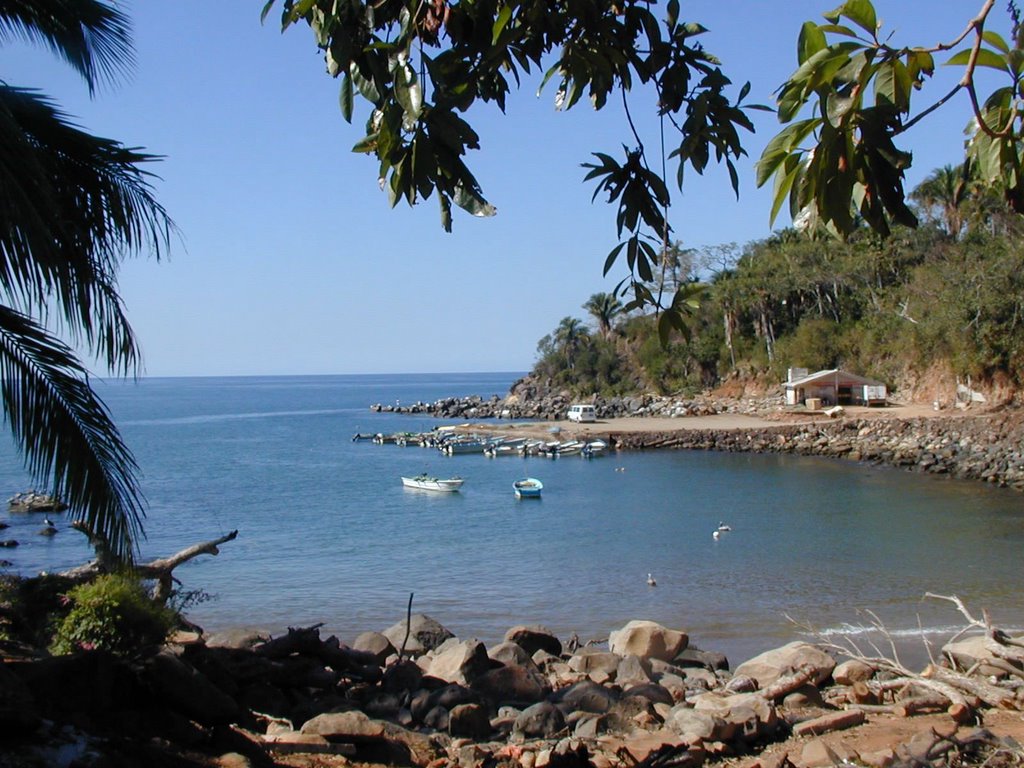
Chacala, Nayarit, is located on the Pacific Coast of Mexico, about 2 hours north of Puerto Vallarta. Read this site for information about:
* Travelling to Chacala from the airport
Driving from the PV airport to Chacala
* Buying and Building in Chacala
* Favorite Locally-owned Businesses in Chacala
*Camping in Chacala
*Other Chacala Websites
*Visiting the Petroglyphs
*Fishing, Whale Watching, and Surfing
Learning Spanish thru Immersion.


Please contact me at alatawah@gmail.com with questions, suggestions, or corrections.

For photos and contact info for almost all the rentals in Chacala,
go to Chacala Vacation Rentals

To read about living in Chacala, go to My Life in Chacala


Tuesday, June 05, 2007

Chacala Nayarit

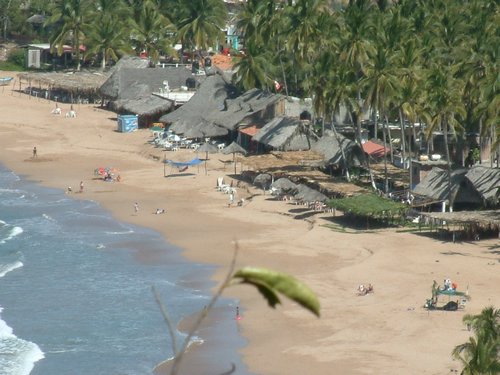
Chacala is a small tourist and fishing town on the Pacific coast of Mexico, about two hours north of Puerto Vallarta. Chacala has a beautiful sandy beach with a safe gentle slope, and the water is comfortable year-around. Chacala is a good place to learn Spanish, because for about eight months of the year there are very few English-speaking residents or tourists in Chacala.

To the right on this page "Links" connects you to various sites about Chacala.

Tuesday, May 15, 2007

Photos of Puerto Vallarta Airport and Bus Terminal

THE POST WAS UPDATED December 17 2007

This website provides information about Chacala Nayarit.
If you are interested in renting in Chacala Nayarit, go to
Chacala Vacation Rentals or http://chacalabudgetrentals.blogspot.com
Or for more rental photos go to Chacala Rentals

DIRECTIONS TO SMALL TOWNS NORTH OF PUERTO VALLARTA via Bus or Taxi

These directions begin at the PV airport, and were originally intended specifically for people heading toward Chacala, Nayarit via the Pacific Busline. However, I have added info for people heading for:

Mezcales (Pacifico terminal)
Brucerias (Pacifico terminal)
Sayulita - (to town or to highway dropoff - 1.5 miles into town)
San Franciso/San Pancho (on the highway at the edge of town)
Lo de Marcos (on the highway at the edge of town)
Le Monteon (on the highway at the edge of town)
Guayabitos (on the highway) (better to take the bus to La Penita and take a taxi or combi)
Los Ayalos (on the highway) (better to take the bus to La Penita and take a taxi or combi)
La Penita (Pacifico terminal)
and Las Varas/Chacala. (Pacifico terminal)

The same bus continues north to Compostella and Tepic.

Photos and Directions


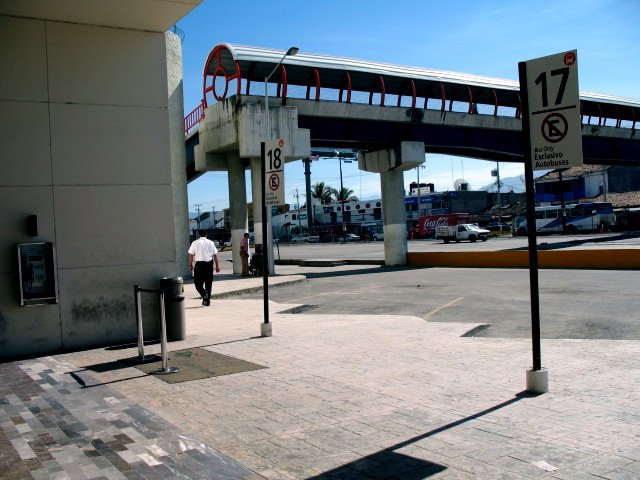
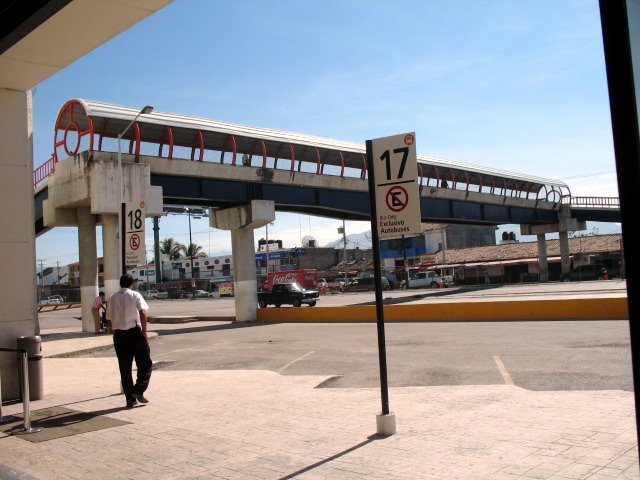
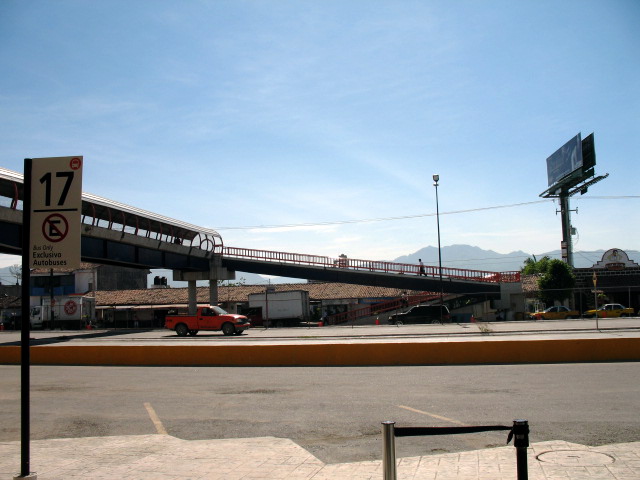
This (below) is your first view as you exit the customs/baggage area in the Puerto Vallarta airport. Straight ahead, outside, and to the left is the beginning of the bridge that goes across the street to the cheaper taxis and to the city buses going north to the bus terminal. "ATM" buses headed directly for Brucerias and Sayulita also stop here.

Normally, this area is filled with drivers waving signs and calling to you. And friends, etc.
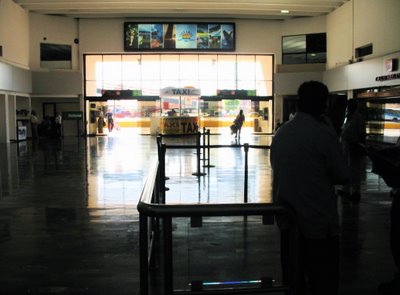
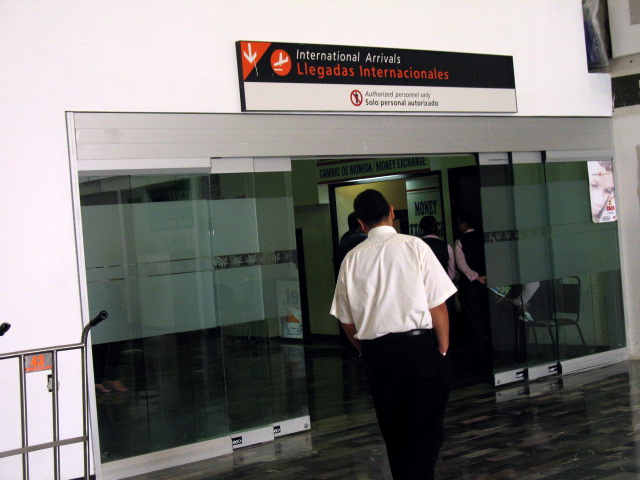
There is a booth with the more expensive airport-sanctioned taxis here, with prices posted.This would be the doorway (below) you just came out of as you left the customs and baggage area (if you turned around and looked behind you).If you want to use the restrooms, the ATM cash machines, the Cash Exchange, or get a snack or liquid refreshment, or whatever, follow the directions at the top of this post.

(as follows: Leave the Arrivals area at the big taxi sign. Go to your right, and then your right again. Walk along the building for about 100 to the big glass doors and reenter the airport, on the Departures side.)

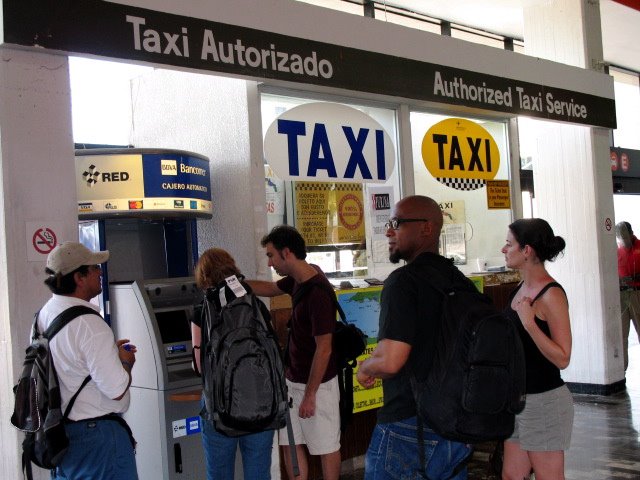
There are three ATMs at the airport, and none at the bus terminal (so get some pesos at the airport), and there is no baggage holding area at the PV airport.This is a taxi stand you probably want to avoid. It's very expensive and it's the same taxis as across the street.
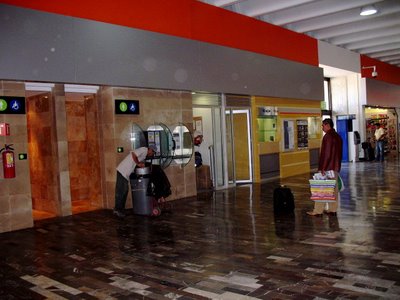
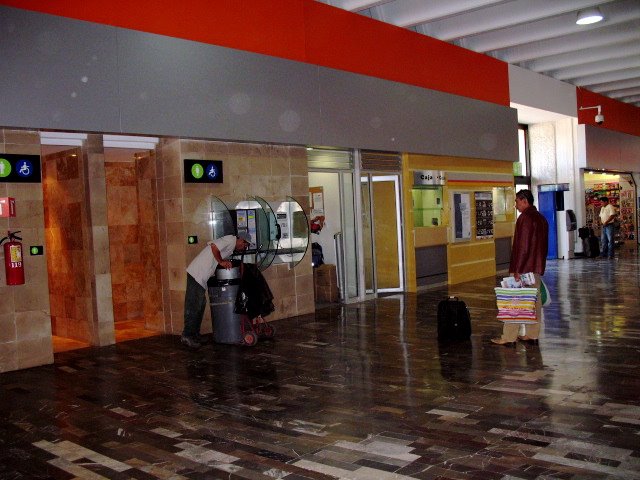
Once you are back in the airport buildng, on the Departures side, there are all kinds of stores, a bar, bathrooms, a money exchange window, the first of three ATMs, a magazine and gifty-y shop, and a "Cuban" bar. There is a Starbucks upstairs, near the departure area. And a Carl's Jr. This is the Bancomer ATM, which I think has no extra fee. This is another taxi window is for the expensive "official" taxis whose drivers pay the airport to drive into the parking area.

After you do whatever, go back outside and back around the building and notice the bridge overhead, crossing the highway. There's usually a bunch of big charter buses here, taking people to resorts.
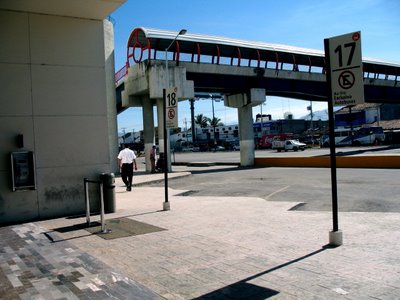
Go toward the bridge, and find the rampway, following the guy in the white shirt. And you will see the start of the bridge across the highway. To the less expensive taxis and the buses. You have to cross the bridge to get an affordable taxi, a city bus or an ATM (short distance) bus. And some places to eat and buy drinks, snacks, etc.

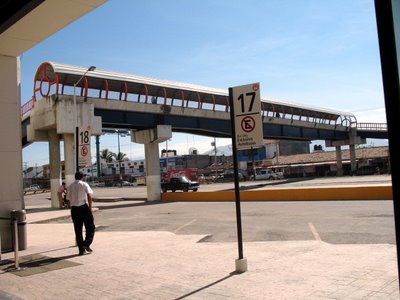
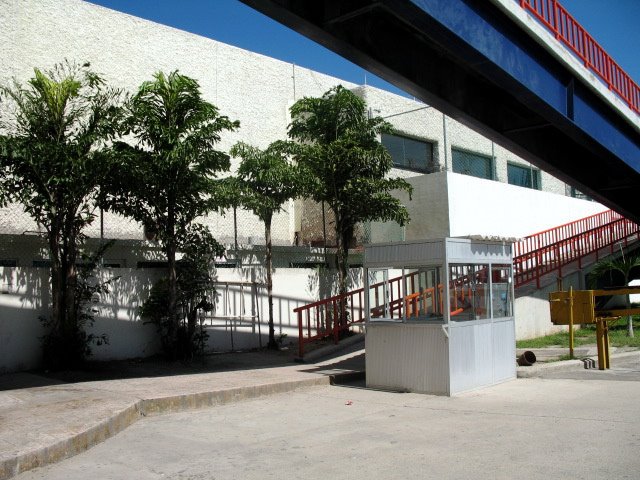
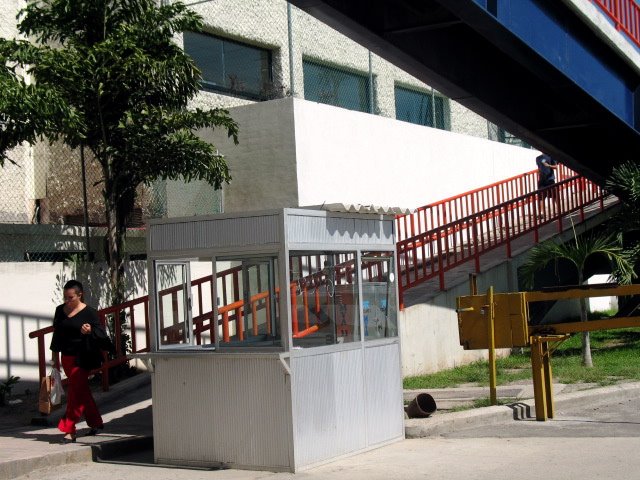
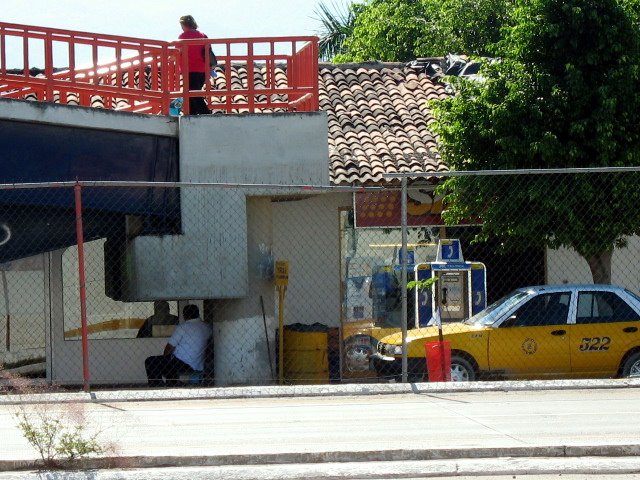
You walk across the highway, and down the ramp. The taxis are behind you and the bus stop is in front of you as you come off the ramp.
Taxi waiting area.
If you are heading to Mezcales, Brucerias, or Sayulita, you can catch aa ATM bus (grey new looking buses) or a taxi here. The buses have their destinations written on them in white paint. On the window. Or someone at the bus stop might help you. Wave at the bus you want, otherwise they might not stop for you.
This is the inside of an ATM bus headed toward Brucerias.
OPTION #1 (north to Chacala and other stops)
The quickest and cheapest way from the airport to Chacala via bus is to catch the "ATM" bus (at this bus stop across the bridge from the airport) to Brucerias (10 pesos), and get off at the Pacifico bus ticket office there - the driver will stop there if you ask him to. say "Pacifico, por favor". This is the Pacifico Bus Terminal in Brucerias.
(It's the exact same buses that start out at the bus terminal.)
This is their second stop coming nort
h.
Then buy a ticket to Las Varas via the Pacifico bus (60 pesos). They come every half hour. There is a free bathroom there, probably no TP. And a small tienda down the street. Your bus will say "Tepic" or possibly, "Guadalajara".

The advantages to taking one of these local buses is
1) you don't have to go to the Bus Terminal (Caminonera Central),
2) they cost between 8 and 20 pesos (75cents/2.00US),
3) in the case of Sayulita, the bus that says "Sayulita" will take you right into Sayulita. Most of the Pacifico buses drop you on the highway where there is unlikely to be a taxi and you have to walk about 3/4 or a mile, maybe further). However, a few Pacifico bus DO go into Sayulita, but I don't know how that works.

There are also collectivos/combis going by, but you would need to know what you were doing and exactly where you wanted to go to take one.

Option #2
If you aren't taking the ATM bus to Brucerias but want to take the bus to Chacala you must get to the Camionera Central, about two miles away.
Getting to the Central Camionera
(Inter-city bus terminal)
You will need to catch either a taxi or a city bus to go to the Central Camionera.

City bus: You have to ask the bus driver if he is going there because it's hard to tell from the window signs where they are going. Again, someone may help you if you ask. 4.5 pesos.(40 cents). You need pesos, not dollars or loonies. It's hard for the drivers to understand gringos saying Central Camionera. Roll your R's. The drivers are usually in a hurry and not passenger friendly.

The blue bus with a sign that starts with Mojo goes right by the corner of the bus terminal. that's the best bet, I think.

Taxi: The taxi drivers across the bridge usually watch for people coming across the bridge and ask if you want a taxi. The taxi to the bus terminal should be about $6o pesos ($6US), a little more if there is more than one person and/or lots of luggage. The driver might offer to drive you to whereever you are going. Chacala is usually about 600 pesos. $55 , but it could be much more.

Don't let the taxi guy drop you off at the Vallarta Plus terminal (new, small, on the right before the real terminal). Those buses are expensive and only leave every few hours, and opposed to Pacifico, whicis is 70 pesos and leaves every 20 or 30 minutes.

Camionera Central
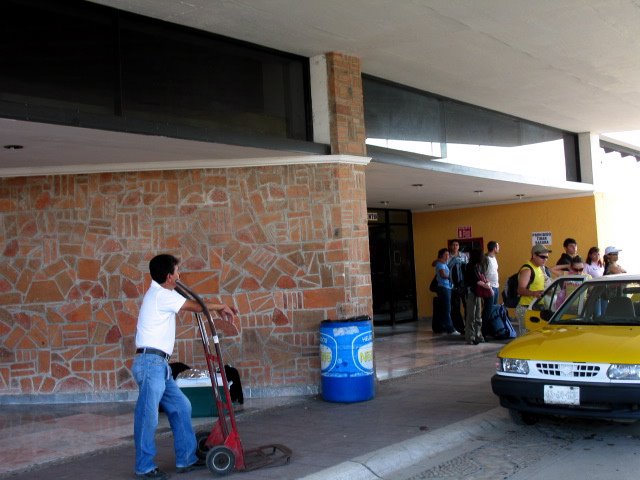
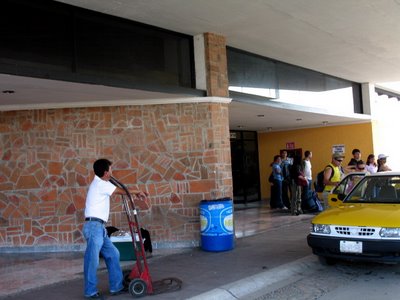
This is the entrance to bus terminal. The city bus leaves you about a 70 feet away, and it's obvious where to walk to. The taxi leaves you at the door.
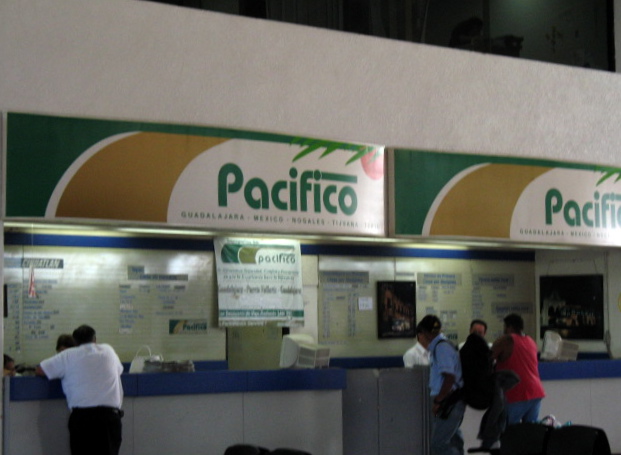
This is the Pacifico window. If you aren't confident with your Spanish, it helps to have a piece of paper and pen handy. You want to go to Las Varas (pronounced Las Baras). I used to write a note, and show it to the guy. They never have change for a 500 peso bill, and sometimes not for a 200 peso bill, so planning ahead is good. It's now $80 pesos for a one-way ticket to Las Varas, about 30 pesos to San Francisco.
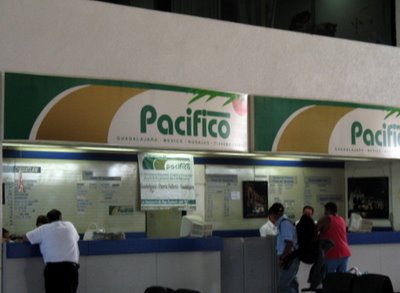
After you by your ticket, the ticket guy will usually point on the ticket the number of your bus and the number of the slot it will be at. And what time it will leave.

They have loudspeakers, in Spanish, but I wouldn't count of hearing anything. It's better go outside about 10 minutes before the bus is supposed to leave and stand around with the other people going on the Tepic bus.

There is a bathroom inside the terminal, clean, and now some have toilet seats, for 3 pesos each. There are a couple of junk food places and a small restaurant that sells beer too, I think.
There is also a baggage check. Very cheap. Not for overnight. Some people take their stuff there, go do errands around town, and come back to the Terminal and head north.

There is NO BAGGAGE CHECK at the P.V. airport.

Often there is no toilet on the bus, or it isn't working. Planning ahead is good because the buses doesn't make bathroom stops until Las Varas.

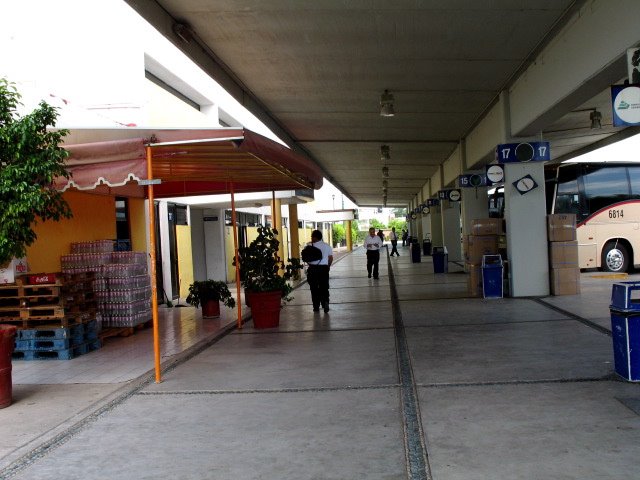
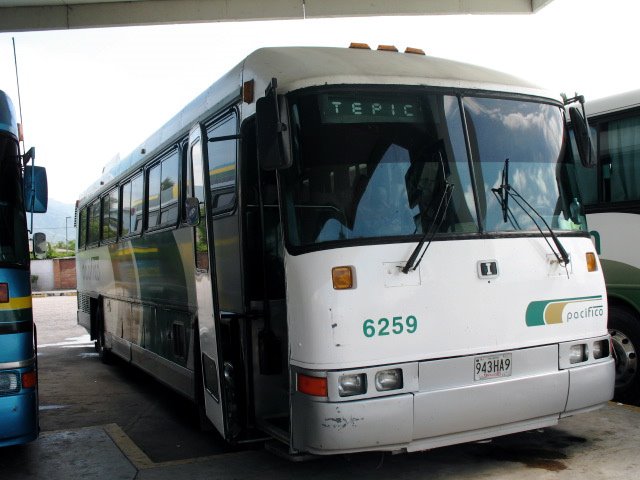
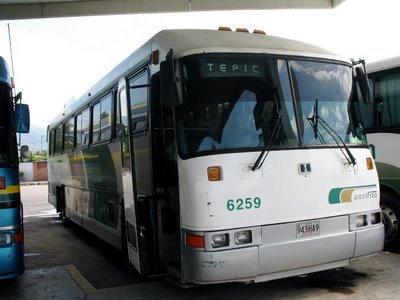
(Below)This is where the buses wait for the passengers at the P.V. bus terminal. The bus to Las Varas (and Mezcales, Brucerias, Sayulita, San Francisco, Guayabitos/La Penita, etc) is actually the bus to Tepic, and the sign in the window will say Tepic.

The driver take you ticket and will notice you are going to Las Varas (or wherever), but you might mention it to him or his helper as you board.

If you have lots of stuff you can ask to have it put underneath, or the driver may insist. They give you claim tickets and are pretty careful about the luggage. But sit on the passenger side and keep an eye on what comes out of the luggage compartment at bus stops, in case there's a problem. And keep your claim check. And your ticket.

Make sure the driver knows where you are going. If there is no one waiting to get on the bus, and the driver don't realize where you want to get off they won't stop. The only Pacifico bus stops with bathrooms are Mezcales, Brucerias and La Penita, and Las Varas, but don't count of being able to get off the bus, or that the toilets will be available at any of those stops. The trip north is about 2 hours to Las Varas.
This is the Las Varas Pacifico bus terminal for northbound buses. The taxi stop (to Chacala) is at the corner going back. It's obvious most of the time, with a line of taxis waiting, until early evening sometime. The gringo charge is usually 90/100 pesos ($8 or 9US) If you want to try to catch the collectivo to Chacala, walk another block down/south the same the bus came into town on, past the CMQ pharmacy, cross at the signal, walk past the furniture store and Dani's Tacos, and turn left.
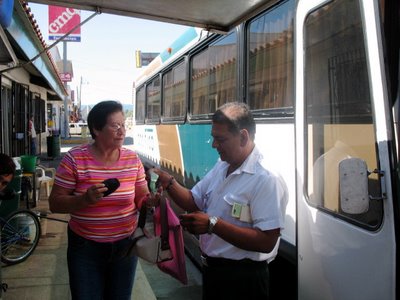
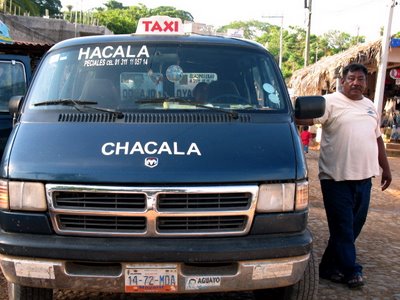
Right there is the collectivo stop for Chacala (10 pesos) and some other towns. They start running about 7am until about 6 or so at night. If you have alot of stuff and the collectivo is full, you might consider taking a taxi rather than crowding in.If you have a reservation, or a place you want to go to, ask the driver to take you there. If the collectivo driver seems to be going out of his way for you, or helps you, tip him. 10 or 20 pesos.
Many of the taxi drivers and combi drivers know where all the rentals are. Someone will know.

If you don't have a reservation, you might get off the Juan's Joker Tienda, and walk up the hill (away from the ocean). There are some good rentals this way. The ones up on the paved road, 100 feet are Techos de Mexico rentals (Aurora and Concha), Casa Chacala, and Casa Iguana.

Saturday, April 14, 2007

Driving to Chacala from Puerto Vallarta

Driving to Chacala from Puerto Vallarta
And suggestion for driving in Mexico

Note that the time is Chacala is one hour earlier (Mtn time) than PV (Central). This is important when returning for your flight.

When you leave the airport, you will be following the signs to “Compostela.” If you are renting from one of the rentals counters at the airport, many of them are on the highway going north, and their van will take you from the airport to the car.

Then it is easy to go north (and trickier when you return). You want to be on Nayarít Highway 200, north. All the way from the airport to the turnoff to Chacala. The signs start out saying “Compostela,” which is much farther than Chacala. Nothing will say “Chacala.” Later in the journey, the signs will add “Tepic,” which is even farther, but tell you that you are on the right track.It takes about 90 minutes to get to Chacala, but it totally depends on traffic.

The first half of the drive is mostly in mountains. The highway is all two lanes, with no shoulders and few turnouts. Be patient. And watch out for impatient drivers.

Parts of this road carry a lot of traffic. You will pass by Sayulita, San Francisco, Lo de Marcos and El Monten. Then comes Guayabitos-La Penita, where there are four traffic lights.

The turnoff to Chacala is about 15 minutes north of La Penita.

The landmarks before the turn-off to Chacala:

When you pass a white LP Gas Station on the left, called “Global Gas,” you are getting close. About a mile past the Global station there is a string of fruit stands on the right. When you start seeing them, you know you are close.

The road to Chacala is a wide intersection on the left. In order to correctly make the left hand turn to get onto the Chacala road, you need to pull over to the right, on the gravel in front of the fruit stands, and stop opposite the Chacala road.

And then wait for a break in the traffic and zip across the highway. DO NOT stop on the highway and signal to make a left. You will probably cause a wreck if you do that.

There is a hotel called Dora Maria on the far left corner, across from the fruit stands. If you reach Las Varas, a town about a mile north of the turnoff, you will need to turn around and go back south.

To do that move over to the right lane of the highway and then move onto the lateral as it appears, on the edge of town. Drive on the lateral to the first signal, wait for a green arrow and go back out on the highway, heading south.

RULES OF THE ROAD, Mexico:

An important word to know when driving in Mexico is “Topes.” This word and the signs indicating them means that there is a major speed bump of some kind, often on major highways like 200. If you don’t see them and hit them at high speed, make sure your seat belt is fastened! They are used to slow down traffic at villages mostly. There are also areas with a set of grooves , intended to warn you of something.

Many drivers in Mexico over double lines, on curves, hills, etc., so stay sharp.

Passing: If you decide to pass someone, watch for the vehicle passing you while you are passing.
If you are behind a slow truck or bus grinding up a hill, and he gets to where he can see it is safe for you to pass (before you can see over the hill), he will put on his left blinker, to tell you to pass him. Of course, he may also signal left because he is making a left turn!

Left turns are variable, depending on road designs. In some towns like there is a single lane separate from the highway on each side. To turn left, you must get off the highway and onto this lateral, then wait at the intersection for a little green arrow to appear in the signal lights. Traffic will be stopped and you can make a left or U turn.

Other times there is a pull-out to the right, where you wait for your chance to dash left across the highway. The Chacala turn is like that. Do not stop in the highway with your left turn signal blinking.

Traffic signals begin to blink the green before they go to yellow and red. Most Mexican drivers ignore yellow, and many use the red to speed up. Your sudden stops at the first sign of blinking green or yellow will cause trouble. When in Mexico, do as the Mexicans.

Do as the Mexican drivers do. US-Canadian driving rules do not necessarily apply.The road may look the same but the rules are different. Pay attention.

Here are some road signs you might encounter:


No rebase = no passing

No rebase con linea continua = Don’t pass over solid line

Concede cambio las luces = lower your high beams (grant the changing of your lights)

Utilize su cinteron seguridad = fasten your seatbelt.

Moderate su velocidad = slow down (moderate your velocity)

Entroque peligroso = dangerous intersection or crossing (like truck crossing)

Topez a 100 meters = speed bump in 100 meters (300 feet).

No tire basura = don’t throw trash/ no littering

Obedezca las signales = obey the signals

Camino de bajo velocidad = a road of low speed

Conserva limpia la carretera = keep the road clean / no littering.

Chacala Nayarit: Transportation From the PV Airport

(Part of this post is duplicative of the previous entry)
There are a couple of options for getting to Chacala from the Puerto Vallarta airport.

You can make prior arrangements to be picked up at the airport
or
you can take public transportation (taxi or bus).

In either case, I would suggest you get something to eat before you head out for Chacala, or bring some snacks, because if you arrive after about 6 or 7pm most restaurants are closed. Also, the ATMs (three at the moment) at the airport are the cheapest way to get pesos. There are also money changing windows at the airport (Cambios).

PRIVATE TRANSPORTATION TO CHACALA FROM THE PV AIRPORT
A pre-arranged airport pickup is not cheap, however, particularly for people with lots of luggage, surfboards, disposable income, small kids, or for people with later arrivals who don't want to arrive in Las Varas after dark, this is a very practical option.

During the winter it is dark in Chacala before 5pm. However the airport is one time zone earlier, which gives you an extra hour to get to Chacala before dark.

There a locally-based van service that will pick you up, by reservation, at the airport, and bring you to where ever you are staying in Chacala. The fare is set ahead of time and depends on various factors (arriving or departing, other guests arriving/departing at the same time, season of the year, etc). In both cases you are met by the driver with a sign at the baggage/immigration exit in the airport.

Cundo's Chacala Taxi Service can be reached as follows:

Via email at trinimoya2@hotmail.com
By phone at 011 52 327 219 4018
Trini speaks English and the drivers speak some English.

You will be offered a specific fare after you make contact with the specific details of your flight, including airline and the arrival time in Puerto Vallarta. Your arrival time may impact the cost of your trip (shared rides, etc).
Cundo has several large vans with 7 or 8 comfortable seats with seat belts. These vans are clean, new looking, have good insurance, are federally licensed, can carry lots of lugagge and surfboards, and have AC. The drivers speak at least some English, and are licensed and insured.

PUBLIC TRANSPORTATION TO CHACALA FROM THE PV AIRPORT
As of September, 2007, as you walk out of the immigration/baggage area of the airport you will be in the main floor of the airport, which is generally full of resort reps, taxi drivers etc, most with signs. At this moment, if you need a restroom, ATM, phone, money exchange, food, or a newspaper don't walk out the doors in front of you, but walk back around behind the area you just came out of and find what you need. You will notice the new wing of the airport is open, with more shops and restaurants, including an escalator to the second floor departure area.

If you are ready to head for Chacala, and haven't made prior arrangements to be picked up you have several choices.

1. You can take a taxi to Chacala. If you engage a taxi driver within the airport or right outside the door you will pay top price. If you walk out the doors right in front of you as you leave the baggage area and look to the left you will see a ramp leading to a bridge across the highway. On the other side there are other taxi's who haven't paid the special airport fees to be allowed to work right in the airport parking lot. So they are cheaper and no different, as far as I know.

Be sure to negotiate the fare before you get in or allow the driver to take your bags.
You will need pesos from now on, and the airport ATMs are good because they give out smaller bills, which you will need. I think the cheaper taxis are between 60-80 dollars (400-800 pesos) to Chacala. Might be less, might be more. The driver takes less than two hours, depending on this and that.

The taxi driver probably won't know where you are staying in Chacala, but he can ask around and find out for you. Be sure you are taken right to where you are staying and that someone is there with a key. Most planes land in mid to late afternoon in Puerto Vallarta, and chances are you will arrive in Chacala after dark from December-March. If you have reservations, that person will probably make clear arrangements with you about the location of your rental and accessing the key.

2. You can hitch-hike which would be very unusual in urban Mexico and you would possibly attract the interest of the police or (other) disreputable people

3. You can catch the ATM (grey) bus (signs say Bruceria, Punta de Mita, or Sayulita). Get off and Brucerias Pacific mini-terminal, and catch the Pacific bus (runs every 30 minutes) to Las Varas. This is for people without much stuff and some confidence about travelling in Mexico.

3. You can take the bus to Las Varas and taxi or combi to Chacala.(Via the ATM bus to Brucerias and ten Chacala)
You can take the ATM bus from the bus stop across the bridge from the airport to Brucerias. It costs 10 pesos. The buses are grey and modern looking. Wave one down when you see it.
In Brucerias get off at the Pacifico busline stop, which is about halfway thru town, on the highway, on the right. (Say to the driver "Por favor, Pacifico".)
Then catch the Pacifico bus to Las Varas-Tepic. It comes every 30 minutes as is 60 pesos. This is the easiest travel plan. And quickest.

3. You can take the bus to Las Varas and taxi or combi to Chacala.
(Via the Central bus terminal /Camionera Central)
To catch the Pacifico bus, first either take a taxi (by either method above) or a city bus and go to the central bus terminal (Camionera Central). The bus stop is across the bridge, from the airport, near the cheaper taxis. Ask the driver is he is going to the Camionera Central, which is about a mile and a half north of the airport, on the way to Las Varas and Chacala (Nayarit). The bus that has "Mojo....." is the right one.

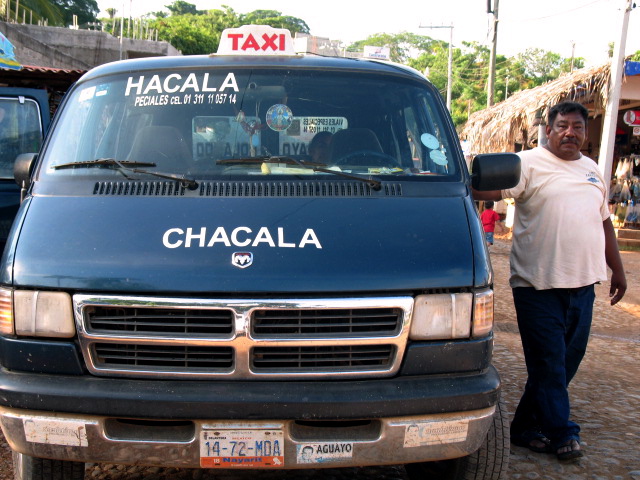
There is another Chacala (Jalisco) to the south, so be clarify that to the taxi driver. For some reason the gringo pronunciation of Chacala sounds like Chicago to many taxi drivers, so be sure you are hearing each other correctly. There is no ATM at the bus terminal so get pesos at the airport ATM's. The taxi fare from right at the airport is about $15USD or a little more, and from across the bridge is about $6USD. The city bus is about 5 pesos/50 cents US.

When you arrive at the bus terminal enter and go to the Pacifico bus counter and ask for a ticket to Las Varas (V pronounced as B). Usually they run every half hour or so. The ticket is about 76 pesos or about $7USD. Ask what gate the bus leaves from and what time. There are clean bathrooms with TP and turnstiles (30centsUSD). They usually have small change only. No bills. There are a couple of snack shops and little restaurant. You go through little security gate where the guy writes his initials on your ticket. This is a new thing and I have no idea what the point is, except to slow you down when you are late for the bus.

They load the buses quickly. If you have more stuff than you want to take on the bus with you, you can check your stuff under the bus. It's probably a good idea to sit on the passenger side so you can watch you stuff during the brief stops on your way north. If they give you a luggage tag, don't lose it. They will want it when you claim your luggage.

There are taxis to Chacala at the Pacifico bus terminal in Las Varas until maybe 9pm or so, sometimes later, and the fare is usually about $100pesos (US10$). There are two collectivo's going back and forth to Chacala from about 7am to about 5 or 6pm for 12 pesos ( $1.10US). The taxi drivers may be willing to point out the collectivo stop to you. It's about two blocks back the way you came into town and front of the Taco sign. Most of the taxi driver's know their way around Chacala, and the collectivo drivers know everybody in town.

Friday, April 13, 2007

Some of my Favorite Places in Chacala

SOME OF MY FAVORITE, Locally owned, ENTERPRISES IN CHACALA.

This is a list of some of my favorite places in Chacala.
I think it only includes places owned by people who live in Chacala.
It is not a complete Chacala resident-owned businesses list.
It includes the places I like to go to the most. Or the people I enjoy the most.

Cundo's/Chacala Van Service offers pick-ups and returns to the PV airport, day trips to various towns in the area (Tepic, Guadalajara, San Blas, Sayulita, Mexicalitan, etc) and to other places of interest to visitors. His vans are clean and very nice. They are federally licensed, with good insurance coverage. The drivers speak at least some English and are licensed and insured. There is room for lots of luggage and surf boards and have 7 or 8 passengers seats with seat belts.Reservations can be reached by calling 011 52 327 219 4018 or by emailing at trinimoya2@hotmail.com. Or take a look at a new website, Chacala Escape
Or, from the US, call 011 52 327 219 4018.

Lupe's Massages. Lupe is does wonderful massages in your home. Contact her in person. Her home can be reached by staying on the paved road as you approach Chacala (do NOT turn off at the green "Playa Chacala" sign). When the paved road ends at the large wooden gate, turn left and Lupe's is the fourth home on the right hand side of the dirt road.

Trini's Escuela de Espanol (Spanish Immersion Program)
offers group or individual Spanish instruction using an immersion model, which works well in Chacala, where there are few English speakers.
Trini has been teaching Spanish for more than fourteen years, and makes learning Spanish comfortable and not intimidating. Trini can be reached at trinimoya2@hotmail.com or
by calling
from the US 011 52 327 219 4018.
Or go to Trini's Escuela de Espanol


Majahua Resort (Small Hotel, Spa, and Gourmet Restaurant)Majahua is a small hotel, five units, located above the south end of Playa Chacala. It has an incredible spa, with massages. The spa has waterfalls and hot and cool ponds, and incredible views of the ocean. The gourmet restaurant is open for guests, and by reservation for visitors.

Chacala Tourist Coop offers boat rides, fishing trips, whale/dolphin watching, and exploring isolated beaches. At least two members of the co-op, each with their own boat(s) are available all day, every day, at the small fishing dock (muelle). The dock is located by following the "Captain de al Puerto" signs all over town. You can fish, whale and dolphin watch, go to the surfing beach (Las Caletas) or the next lovely swimming beach to the south (Las Cuevas). You can also buy fish down at the dock, muelle, in the early morning, fresh off the boats.
To contact the Co-op for reservations or more information email trinimoya2@hotmail.com.Or call from the US 011 52 327 219 4018. Or go to the Chacala Tourist Coop website


Chico's Restaurant and Bar
serves delicious smoked and grilled fresh-caught fish and other Mexican and seafood dishes. Their new full-service bar offers whatever you want to drink. The palapa restaurant has two levels, one with concrete and the other with sand floors. You can sit at your table and watch your kids play in the water only a few feet away.
Angeles's (and Francisco's) Tiendas.
This family owns two nice tiendas: one on the beach road, right in front of Chico's restaurant and the other up next to the Church.
Aurora and Beto's Techo de Mexico Tourist Rentals Very affordable and about a block and a half to the beach. Aurora is my favorite landlady in Chacala, and her rooms are my favorite rooms. Shady, with flowers, and quieter than other places in Chacala.Cammie's Tourist ShopSarai's Mini-Mart is located right next door to Trini's Escuela de Espanol, and offers some basic food stuff and coke, milk and water. Sarai in very involved around town, particularly with the kinder and with an adult education class for adults in town who never, or hardly ever, went to school. Now has horrible video games for 1 peso a game.

Juan's Tienda, "The Joker"

Food Delivery Services.
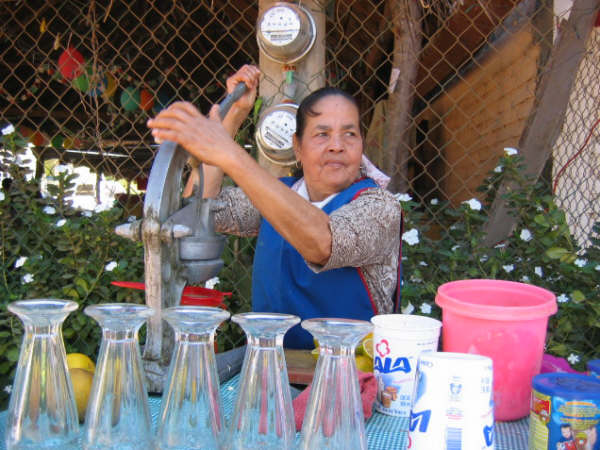
There are a number of individuals in Chacala who sell homemade or professionally-made food by walking around town, sometimes with a wheel-barrow, or sometimes driving. There are t bakers, several orange juice makers, coco drink makers, a person who makes delicious apple tarts and small loaves of sweetbread, and various other cooks. Sometimes there are tamales, you never know. Even Concha sells iced juice drinks during holiday periods.


Paolo and Berta's Taco Stand
is right across the street from the driveway into Chico's parking lot. They have a nice little six table restaurant. Very clean, and decorated with a red/white color theme. The tacos are great and you can watch them being cooked. They have a nice sanitary stainless steel setup that I really like.

Daniela's Tourist Shop
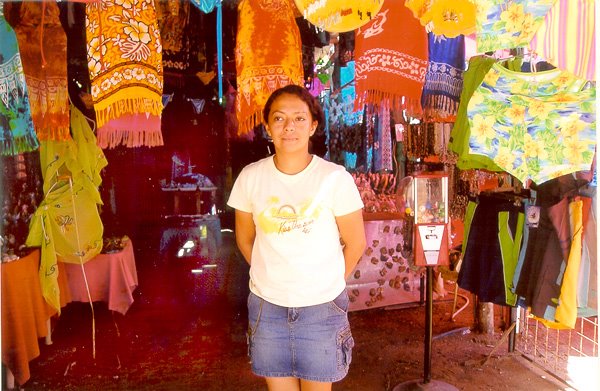
There are a number of souvenir shops with clothes and shoes and tourist stuff. Three of them, Cammie's, Ophelia's, and Daniella's are locally owned and operated.


Fonda de Lupa (Restaurant) This is one on the first puestos on the beach road. Good place to get a Coke.
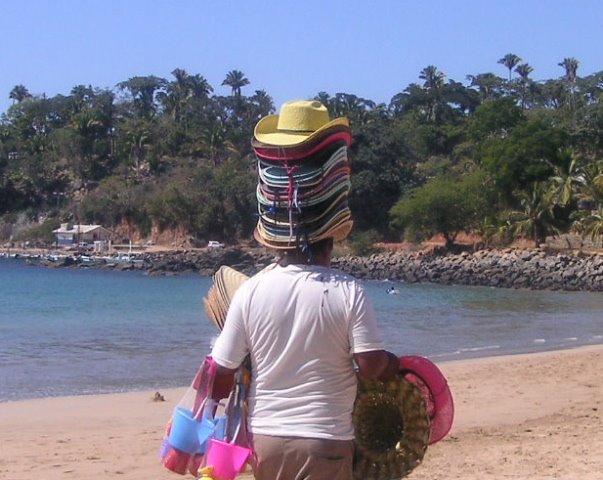
Beach Vendors On weekends and during Christmas and Easter vacation there are usually some beach vendors peddling their wares. Never agressive, almost always cheerful. They have a really hard job.


Sarahi's Hotel and Bar
is about half a block from the beach, right behind the water pumping station. She has eight rental rooms, most with a beach view.Juanita's Tienda is located in the middle of the main "business" block in Chacala. Has most everything and is open early to late. Located right next to Koko Bongo's and across the street from Las Brisas.
Ophelia's Tourist Shop
Ophelia's shop is located at the main intersection on the beach road in Chacala. It
s right next to the bizarro real estate office that looks like a church

Koko Bongo's Restaurant and Pool Hall is painted green this year, and is on the beach road. The wife is a well-trained professional cook, who has a nice clean, organized kitchen to work out of. The five children in the family all work in the restaurant and store, and are very fun to be around and some of them speak English. A very enterprising family.
Jorge's Deposito
Casa Chacala is a two-year old new six-unit hotel in town, with a swimming pool and a very nice shady, plant-filled patio overlooking the pool. Each room has a great view of Chacala. Casa Chacala has two wonderful owners who have become very involved in the town.
Koranee Hardware Store is part of a local chain in the area. The Chacala store is owned and run by local folks. The store is located on the beach road as it head up the hill toward the school.
Mirador Hotel (Chata and Isreal's rentals)Mirador is a six unit building (painted blue) located on the short bluff overlooking the sea, and is part of a family complex filled with trees and flowers. The units vary in size and amenities. The very nicest is a large one bedroom/bath unit with a very nice kitchen located on the covered patio overlooking (about 15 feet from) the ocean. The smallest is a one double bed (which pretty much fills the room) unit with a tiny bath. Clean and well-cared for. Guests can use a large palapa area with hammocks overlooking the water.

Gracias Techos de Mexico Rental
This rental unit is upstairs with patio/kitchen and a large bedroom with bath. Right across form the Church. A very nice family owns this rental, and it's very clean and nice.

Mars Tres Restaurant and Rentals is located two spaces up from Juan's Tienda, on the main road. Right across the street from the beach. Always open, early and late, with delicious tostados, tacos, breakfasts, etc. Good service and very friendly owners. The three new rental units share a large view patio with hammcocks. Very nice units.Lalo's Fish Market located just uphills from Juan's tienda and the Las Glorias Posasa. Open at the time, usually with the radio playing. They clean, weigh, and package your selection from the morning catch right in front of you.
Marcella's Tienda offers snack and alcoholic beverages and refrescos. Located between Juan's tienda and Tres Mars. Victor's Pizza is located here when open for business.

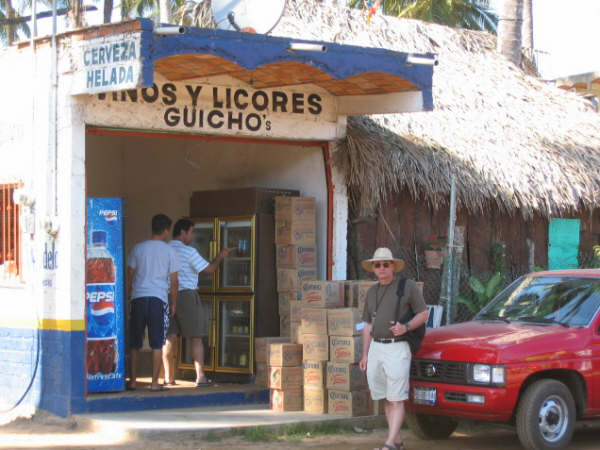
Guicho's Vino's and Licores
Here is one of the local liquor stores. Generally open Sunday and holidays.


Mingo's Restaurant, or Event Place (often has Pozole available, pick up or dine in) on Saturday nights.
Juan Luis's Rentals (part of Concha's rental complex). Brand new very nice units withkitchens on view private patios.
Villa Celeste (on the site of the former Casa Azul)
Villa Celeste has 8 units, and the site overlooks the ocean. Less than a block to the beach. One building is brand new, all units have kitchens, and are air-conditioned.

To find more information about Chacala rentals go to Chacala Vacation Rentals (http://chacalabudgetrentals.blogspot.com) or Techos de Mexico. (www.techosdemexico.com)


Thursday, April 12, 2007

Techos de Mexico Rentals

TECHOS DE MEXICO
Techos de Mexico is a program developed by in Chacala by Jose Enrique De Valle (owner of Majahua), about eight years ago. This program helps local families develop a stable source of income by offering construction loans and volunteer building help to create family-run rental units near or on top of the family home. There are currently eight home owners with about 12 rental units. All are well-built, with screened windows, with glass, hot water showers, fans, tiled floors, security windows, and steel doors and two double beds. Some units have kitchens and most have patios or terraces. They are located all over town and are easy to identify by Techo de Mexico signs at each house.

Staying at a Techos de Mexico rental unit gives visitors to a chance to spend time with a local family, and to learn some Spanish.

For more information about Techos de Mexico rentals go to
www.techosdemexico.com

Tuesday, March 13, 2007

Visiting the Petroglyphs near Alta Vista

If you are looking for a half-day trip while you are staying in Chacala, you might enjoy the petroglyph site near Alta Vista. Many people come to Chacala without knowing about this wonderful opportunity. Although Chacala is by no means considered an important historic site, it does as a long history (first Europeans in the mid-1500's), as the first and closest port to Guadalajara.

However, a trip to the nearby Alta Vista petroglyph site is an amazing experience not to be missed by anyone interested in the pre-hispanic times in Mexico.


The field trip from Chacala to Alta Vista takes about 30 minutes by car, and maybe an hour via combi and walking from Alta Vista. The Petroglyphs are located in a river bed in a small valley near Alta Vista.

The Tecoxquines created thousands of petroglyph believed to be part of their religious experience. These petroglyphs were created more than 2,000 years ago. The site offers explanatory signs in Spanish and English. The trail thru the site is just a trail, and not a good walk for those with mobility problems. It's shady most of the walk, and the stream bed contains water during parts of the rainy season. The last part of the drive can be tough, especially during the rainy season.Alvaro, a Chacala resident who speaks English, offers a inexpensive guided tour, using either your vehicle or combi. It is difficult to find the location without a guide. There is usually an elderly local gentleman at the site, who is the caretaker, cleaning up after visitors, etc. One is expected to offer him a small tip.During the tourist season in Chacala, Alvaro offers excursions to the Petroglyph site every morning at 8am. Reservations are necessary. Contact Alvara at his home, a small concrete block house at the north end of the main beach in Chacala. Everyone knows which house is his.

Trini's ( trinimoya2@hotmail.com) family also offers van trips to the petroglyphs, and the drivers speak some English.

Saturday, November 26, 2005

Surfing, Fishing and Whale Watching around Chacala

SURFING, WHALE WATCHING AND FISHING TRIPS
Local Chacala fishermen/tourist guides Cundo, Juan, Beto and other members of the Sociedad Cooperativa Puerto Chacala offer launcha (boat) rides to La Caleta surfing beach year-around.
Fishing trips and beachcombing trip are available year round.
Whale and dophin watching trips are offered from mid-December to about mid-
Fedruary, or whenever the whales are gone.

Below: Boating to Las Cuevas, with Beto
For reservations or further information
email Trini Moya at trinimoya2@hotmail.com

call 011 52 327 219 4018 (from the US)]

Below: La Caleta


AIRPORT PICK-UPS AND RETURNS
For information about van transportation to and from the Puerto Vallarta airport in safe, insured, Federally licensed, clean and well-maintained vans see the contact information below. The drivers speak at least some English, and are licensed and insured. The vans have room for luggage and surfboards.

For reservations or further information:
email trinimoya2@hotmail.com
or call 011 52 327 219 4018 (from the US)
or go Chacala Escape for detailed more information

Friday, October 21, 2005

Camping, RV's and Spas in Chacala

CAMPING ON PLAYA CHACALA
There are different ways to stay in Chacala: beach camping, RV "camping", inexpensive Techo de Mexico family-owned rooms with or without kitchens and patios, family owned mini-complexes with four-six units, small hotels with spas, and other small rentals in varying price ranges. Some with pools. A few with air-con.

Camping on Playa Chacala is often wonderful. Most of the time it feels like being on a tropical island. However, there are times (Sunday afternoons and Semana Santa) when it is very crowded and full of trash. Just a small warning.


Camping on Chacala Beach
There are different places to camp on the beach in Chacala. People genrally camp on the southern end of the beach, south from Chico's restaurant.

My understanding is that each area of the beach (above the high-tide line) is managed by a different person or family under Federal "concessions", which are held by paying annual fees to the Federal government.

There are several camping areas south of the Delphin's Restaurant (where motor home tend to camp in the winter). These include two campgrounds (Esparanza's and Don Beto's) with ramadas and "sweet" (that is, not ocean) water showers and bucket-flushed toilets. And trash cans. Usually electricity is available with your own extension cord. Sometimes the fees for the use of showers, toilets, and electricity are separate from the camping charge, but not always, so ask.
Esparanza's is my favorite camping area. Partly because she has lots of palm trees and its cool and shady, and its the last ramada area on the beach, going south. Don Beto and Dona Lupe have a nice camping area next door.

Most of the camping areas have ramadas (palm shelters), where you can put your tent and set up camp. The ramadas are right on the beach, a lovely setting.

On the days/weeks right around Christmas and Easter the beach and town are jam-packed with campers and buses, etc and it is noisy and crowded. Sundays can also be crowded with day-trippers from Guadalajara, Tepic or Compostella. Not the best time for a camping experience.Some people camp on the beach below the high tide line (and pay at the campgrounds to use the toilets, etc). Often you see people suddenly realizing their tent/camp is about to be swamped by the rising tide, and hurrying to move everything out of the way. There are a few places to park along the beach road where it is quieter and nicer. A person might want to talk to someone at the nearest house and work out an arrangement about parking/camping there. It is worth talking to several people to make sure you are paying the appropriate person for your spot.
Campers/Motor Homes/RV's
One of the beach restaurants collects rents for motor home camping slots on a stretch of beach (mid-beach) at the south end of restaurant row. During January and February there are maybe 35-40 motor homes parked side by side in the beachside slots, blocking the view (and sometimes access) for anyone else camping in that area.

There are showers in that area but I think they are only open during the Easter weeks. Trucks selling drinking water are driving around town every morning (five gallon jugs for 10 pesos).

Trash and garbage has been a huge problem in the area in the past but lately the town has tried hard to contain the mess left by visitors. The trash situation is improving. For one thing, the town has hired people pick up trash around town, with more frequent trash pickups.

The town is also actively discouraging RVer's from digging holes into the sand to empty their black (toilet and shower) water into. That has become popular sewage solution among the gringo (US and Canadian) campers who come to Chacala for extended stays. The hole-diggers are sometimes the same people who explain that they like Chacala because the ocean isn't polluted (yet). Right!!!

In January and February this lovely spot is filled with motor homes
parked as close to the beach as possible.
The rest of the year Mexican families are tent camping here.

SPA/SMALL HOTELS
Chacala has two new spas, one at each of the small hotels located at the south end of Playa Chacala.

Majahua, at www.majahua.com
, has a beautiful spa on the palm and tree covered hillside right above the ocean. The spa itself has a wonderful series of small pools connected by waterfalls, with small private areas for massage and relaxing. The Majahua hotel has a restaurant and a five large guest apartments that rent individually or for retreats for yoga groups, etc. All the buildings are tucked away in the jungle on the hillside overlooking the ocean. It's very beautiful and not be be missed.

Mar de Jade also has a new spa, located in a large building away from the beach and up from the guest rooms. I have only seen it from a distance but it looks very impressive.

TECHOS DE MEXICO
With the support of Jose Enrique De Valle (owner of Majahua), a program called Techos de Mexico, at was developed in Chacala about eight years ago. This program helps local families develop a stable source of income by offering construction loans and volunteer building help to create family-run rental units near or on top of the family home. There are currently eigh home owners with about 12 rental units. All are well-built, with screened windows, with glass, hot water showers, fans, tiled floors, security windows, and steel doors and two double beds. Some units have kitchens and most have patios or terraces. They are located all over town and are easy to identify by Techo de Mexico signs at each house.

For more information about Techos de Mexico rentals go to
Techos de Mexico


Thursday, October 20, 2005

Chacala Websites

For those who like to browse the internet, here are some Chacala webites and blog addresses.
Or check out the LINKS on the upper right-hand corner of this page.

For info about budget priced rentals go to Chacala Vacation Rentals

For a list of all the vacation and long term Rentals in Chacala

For a list of allthe locally owned rentals in Chacala

For more info and photos about the Techos de Mexico
program

For Majahua go to www.majahua.com (a lovely small hotel/spa/restaurant on the south end of Chacala)

For updates about what's happening in Chacala

Or to read about gardening in Chacala go to http://gardenerinmexico.blogspot.com

Or go to Chacala Escape for rentals, surfing, other adventures, including learning Spanish

Or go to Move2Chacala for more high-end rental information

Chacala Kinder (garten)

THE CHACALA KINDERGARTEN
If you are coming to Chacala you might consider bringing some school supplies/play equipment/games for the kindergarten children. There are 6 children in Kinder this year (2007-8).

They are meeting in the new classroom built by several very generous Rotary groups.
The parents pay 20 pesoes each week to the teacher (about $2USD a week) plus some money for supplies and electricity when needed. The parents clean and operate the building. They have worked on the landscaping, painting, and general maintenance.

The Chacala kindergarten is barely supported by the state school system. However, both the Kinder buildings have been built, remodeled, repaired, repainted, plumbed, reroofed and playground equipment installed by volunteers ( often Rotary groups) who are visiting Chacala, who also donate money for materials.

These children do not speak or read English, so, in my opinion, reading materials in English are not particularly useful for this age-group. Almost anything else is: paper, pens, pencils, stickers, white board pens, special little goodies, whatever. A new computer. Games, playground equipment. etc etc.

The Kinder students, and their younger siblings, are so amazing, and so much fun to watch. They are so full of life, and friendly and affectionate. And they love coming to the Kinder. Especially playing on the big play toy, another Rotary gift.
Only a couple of these Chacala kids are Kinder age

Wednesday, October 19, 2005

Chacala: Questions to ask when renting in Mexico

Looking down toward the beach
from in front of Concha's Techos de Mexico rental

Here some questions or clarifications you might want to ask or make when you are considering renting a room in Chacala or probably any small town in Mexico. These seem to be the issues that come up occasionally.

1. Check on the location of the place you are considering. A places you might like the looks of maybe quite a long ways from the beach, restaurants, and stores. Especially if you are walking or are bringing small children to Chacala. Of course that's a good thing for people who want exercise. Chacala, and many small towns in Mexico are not great places for people with limited mobility, although you might be okay if you have a car.There are also noise issues in some neighborhoods (dogs, roosters, traffic, loud music). Or there maybe a loud construction project going on in the neighborhood, during your stay. Usually that means loud music being played by the construction workers, often before 7am. It's worth asking about ahead of time. If the landlady is doing a remodeling project during your stay, you may want to know about it.

2. If you are making reservations, you may want to clarify in advance:
At what point you will be expected to pay the balance of your account (assuming you made a 50% deposit which is very common here during the winter months). Some landladies want to be paid on arrival. That may limit your leverage if there are problems, so you may want to clarify that.
  • About any expectations you and the landlord may have about your deposit. And under what circumstances it might be returned, and what amount might be returned, etc.
  • Whether your rental rate is in pesos or Canadian or US currency. It is obviously to your advantage to understand the exchange rate if the payment is to be in pesos.
  • If the landlady expects to be paid in pesos or US dollars. Occasionally some landlords prefer US currency (maybe they are going on a trip to the States or something).
3. If you are making arrangements by email print out your correspondence and bring it with you, in case there is a misunderstanding.

4. Be sure to clarify in your written emails exactly which unit/dates you are making a deposit on, and you might mention that substitutions without prior agreement are not acceptable (unless you don't care).

5. If you are coming to Chacala between late April and early December you might clarify if the hot water will be working when you are here. Most local folks don't turn on the hot water until December. But often they will turn it on for you if you ask about it. If you are counting on air-con (it's usually here) get specific about extra costs, etc.

6. Make sure the facilities you are interested in will be available during your stay. For example, with the B&B actually be serving breakfast during your stay?
Does the beach in front of where you are staying actually have sand on it?
Is the pool or hot tub actually functioning?
What spa services will actually be available during your stay?
If you are staying the one "all-inclusive", will all meals be served during your stay? And so on.
Forewarned is forearmed. Better to know ahead of time if some facility you really care about won't be available. I am making these suggestions after watching the various misunderstandings that can happen between renters and rentees all over Mexico. These suggestions are not just for Chacala, but for any place you are making rental arrangements ahead of time and sight unseen.

Other Issues to Investigate Prior to Renting in a Small Mexican Village.
This case, Chacala.

1) Are there fighting cocks or roosters on the property, next door, or in the neighborhood?

2) Does the property have a history of problems with fleas or scorpions?

3) What happens if you find the property you rented to be uninhabitable or unavailable upon your arrival? Always check your rental before paying your remaining balance. This is a very unusual situation, but it has happened in the past, but not very often. Plumbing problems, reservation error, etc.

4) If you will be bringing a vehicle, is there off-road parking? Secure parking?

5) Will the facilities you are particularly interested in be available for your use during your visit? Examples: spa services, swimming pool, hot tub, yoga classes, massages, air-conditioning, cable TV, wireless internet connection, meals?

6) Are there guard-type dogs on the property? Next door? In the neighborhood?

7) Is the location noisy for your tastes? Examples are early morning traffic from fisherman or construction trucks, busy restaurant next door, teenage neighbors with loud stereos, all-night fiestas at your hotel.

8) Suggestions for things to bring: If you are particular about your pillows, bring you own if you are staying at one of the basic rentals. No rental allows their bath towels to be taken to the beach. Bring your own or plan to buy one. Or you blow dry yourself in the warm gentle breezes. Check about coffee machines in your unit if that’s important to you. Bring your own coffee or buy it from one of the superstores near the airport if you don’t care for instant coffee. Ditto good chocolate. There are no English language reading materials for sale in Chacala or Las Varas. The Bibliotecha has a selection of used fiction for trade or sale ($2.00 a volume). A bottle opener if you expect to drink bottled beverages at your rental home.


Monday, October 17, 2005

Chacala Info

This is a photo of the intersection of Highway 200, coming north from Puerto Vallarta, and theroadto Chacala. It's about 9 kileometers form here to the beach.

INFORMATION ABOUT CHACALA

Chacala is a very small tourist and fishing village on the Pacific coast of Mexico, about 2 hours north of Puerto Vallarta. It is accessible via public transportation during the daylight hours. It has about a dozen restaurants, an internet cafe with satellite hookup ( open weekdays, usually), a beautiful sandy beach without rocks, kinder-grade 8 school facilities, several groceries, tourist shops, a couple of higher-end, small hotels at the south end of the beach (see Mar de Jade and Majahua web sites), and a hardware store.

Other services, such as a bank and ATM, dental and medical care, laundry services, fabric stores, internet places, hair salons, shoes stores, and intercity and interstate bus services, etc are located in Las Varas, about 10 kilometer away via taxi or collectivo.

RENTALS
Coming to Chacala and making a rental arrangement face-to-face is probably the best way to find an affordable, short or long-term rental. And that eliminates any surprises. As a word of warning, very few landladies here speak English. And from early December thru Easter week many places have already been rented, so it's probably better to have a reservation for those periods.

Of course, if you are equipped for it, there is always camping on the beach if you can't find a room.

See Chacala Vacation Rentals, for photos and contact info for almost every rental in Chacala. There are two larger places with there own extensive advertising budgets, so I don't include them here.

Or to Chacala Rentals for photos and contact info for all the locally owned rentals in Chacala

TECHOS DE MEXICO RENTALS
Techos de Mexico is a local organization that helps local families build nice and inexpensive tourist rental units.
The units are cleaned daily, with clean linens on request, but generally weekly (but generally not for montly rentals).
They have private entrances, with tiled floors and baths with hot water showers.
The construction is funded with co-op loans and partly built by volunteers.
Some Techos units have kitchens and most have patios or terraces.
All have glass windows with screens. Most units have two double beds.

For more information about Techos de Mexico rentals and photos check out their website www.techosdemexico.com

Monthly and Long Term Rentalst
The winter of 2006-07 was the first winter when a number of Chacala landladies became willing to rent by the month, at a seriously discounted rate. There are a number of lower-rent units available longer term in Chacala with monthly rents starting from about $300 USD a month and up. These units are with or without kitchens, cleaning and linen services, beach or ocean views, etc. At the higher end there are very nice units renting for from $USD1300
-1600 a month. These prices are for two-three-or-four month rentals during the winter months.

The best way to find an affordable monthly rental is to come here in early Fall to make arrangments. That's because many short-term visitors make reservations months ahead of time. Or contact me at alatawah@gmail.com

Friday, October 14, 2005

Buying and Building in Chacala

I have a few suggestions, and opinions, about buying real estate and building in the Chacala area. Or really, in Mexico. I am definitely not an expert about real estate in Chacala or anywhere else, but I do have some thoughts, or observations, on the topic, for what it’s worth.

1. Chacala is kind of different from most other towns I know of in Mexico. It is surrounded by large blocks of land (federal land and eijido) that aren’t, at this time, available to individual buyers. And another block is the gated development called the “Marina” (for some obscure reason, since there's no marina there) where the lots are very expensive.

Anyway, the federal government owns a large block of land between the beach and the paved road, and between the gateway to Majahua/Mar de Jade up to Chico’s restaurant. The Feds have apparently been trying to sell it to developers for years. The whole area, in one large block. That means more than half of land along the playa, the beach, in Chacala, is not available for individuals to buy. But it will most likely, be developed, sometime in the future.

Much of the area to the east and north of Chacala, no longer including the “Marina”(originally eijido land), is eijido land, owned communally since one of the Mexican Revolutions, by the Las Varas eijido group. I have been told that a few Chacala residents are members of that group.

About 500 small parcels, small building lots, were distributed to eijido members about seven or eight years ago. Some of those lots were re-sold to gringos, and other Mexicans. Some have been sold to visitors more recently. People who didn't know about the various complications regarding titles, building permits, and the current difficulty in getting a Bank Trust and building permits (required by law) for these lots.
At this point it is not possible to buy or sell these lots. Be careful about these lots. Some gringos and Mexicans wanting to sell their lots will tell you, "oh, no problem". But there's a big problems, so be careful.
The rest of the eijido land remains as a very large block of land, mostly to the north of Chacala, but also to the east. The little "colonia" of small vacation homes, is just east of the paved road, kind of uphill from the center of Chacala. These lots were lots from that distribution. Various eijido governments, which change every few years, have different ideas about what to do with the land, including selling it to a developer.

Apparently there are some court cases in progress about the disposition of the lots that were sold by eijido members, and on which maybe six have been built on by gringo owners. The titles for those lots seem to be pretty cloudy. And I don't think they have building permits. Maybe some do. And I don’t think anyone is selling them right now. But who knows? I hope no one is buying any of those lots until the legal issues are resolved.

In any case, with the ocean on one side, and a development with very expensive lots (the "marina"), and eijido land in legal limbo, and Federal land to the south, there aren’t many lots to be sold in Chacala, and the prices seem to be rising rapidly.

There are some lots being sold in Chacala proper, but many local people now understand about real estate prices and are holding off selling. There are some lots for sale up on the hillside to the south and the south east, back towards Las Varas, and up on the hill to the south of Chacala. Those are also expensive, small lots. And are also in the middle of complicated legal issues regarding their eijido status.

Chacala proper is a very small area, and the lots are generally very small, and built on lot-line to lot-line. There are some small, empty, infill, lots available in town. There are water lines along the street to most of the lots in Chacala proper. The water currently runs about 4-6 hours a day, and it stored at each house for household use. Phone lines are available in most of town, and probably ¾ of the houses have a formal, metered, electrical connection. No streets in Chacala itself are paved, except the road that runs from Las Varas to the “marina”. There is no sewage system in Chacala itself. Most of the houses have below ground cement/brick vaults for their waste water. I don’t know how sewage is handled in the development, the“marina”.

There is also a small development (maybe 45 acres) on the bluff on the south end of the beach. I am not sure what’s happening there. The access is from about a mile east of Chacala. No beach. It is/was also eijido land, so who knows, and is just currently installing a water system from a well about 7 miles from the develop. As of Sept 2007 I think there are two buildings being constructed up there.

2. People considering buying and or building in Chacala would do well to do lots and lots of research about owning property in Mexico. Including laws about real estate, history (de-evaluation in 1992), taxes, your legal status, medical care, banking costs and regulations, importing vehicles, importing household items, visas etc.

Banking processes are different, and are generally more expensive in Mexico. Transferring money from the U.S. can be very expensive if you or your realtor don’t know what you/they are doing. Legal protections, and the entire legal system, is different in Mexico. Being a U.S. or Canadian citizen doesn’t offer any protection, although it seems to be a common fantasy among gringos. Ignorance of Mexican law IS NOT an excuse for illegal acts.

Foreigners can not buy land within about 30 miles of Mexico's borders or the ocean.
Your options are to use a Bank Trust at a Mexican bank or to form a Mexican corporation, where a Mexican national owes either 49 or 51% of the corporation. Can't remember.

Also, if you haven't studied up on Mexican history, their last devaluation of the peso was only 15 years ago. 3. Some other thoughts. If you are thinking of living here, or visiting regularly, it’s definitely worthwhile if you go ahead and start learning Spanish. And once you find a lot, look into who your neighbors will be. For example, almost all the “marina” property owners are wealthy Mexicans, who may or may not be interested in socializing with buyers from the U.S. and Canada. Nor non-Spanish speakers.

The north end of Chacala seems to be attracting gringos: I think there are currently maybe 8 gringo-owned buildings or lots in that end of town. That maybe appealing to you, or it may not.

"Corruption" (otherwise known as income redistribution) in Mexico seems to be different than in the U.S.. In the U.S. I think most of the corruption is by the wealthy and highly placed political and business leaders. In Mexico it’s at every level, and much more open. It’s a different way of doing business. And you need to learn that system. The U.S. rules and customs do not apply. Always remember that the rules are different in Mexico, and it’s up to you to figure out what they are. Social customs are different too. The phrase "Mexican Time" exists because it's real and impacts how business and social life happens here.

Don’t assume you understand what’s going on. Ask questions. Get an independent translator to help you if necessary. And don’t hire the realtor’s cousin or friend or whatever.

4. Find a realtor who is recommended by someone you really trust. Anyone can sell property in Mexico. They are no rules. Look for someone who is affiliated with Realtors who have been in business in this area for more than a year or two. The laws of Mexico regarding property ownership are complex are are all the laws and regulations regarding buying and selling property here. People trying to sell real estate in Mexico often seem to misrepresent themselves.

Speaking English may or may not be a good predictor of quality real estate work.


Choosing a realtor is a “buyer beware” situation in Mexico. Be sure to find out if the person selling a home or lot to you has lots of experience in Mexico. Look for someone with the skills and knowledge they need to successfully complete legal real estate contracts in Mexico. Ask specific questions about their experience and background. Ask about who they work with to complete all the legal work, and find out what they think the timeline with be for completing a sale.

5. It might be a good idea to get references and find out how long your potential realtor has been selling real estate in Mexico, and how many transactions they have successfully closed.

Satisfied customers are probably the best recommendation. But sometimes the problems that come from incompetence in real estate transactions don’t show up for years. It’s a tricky business. Someone affiliated with a real estate agency is probably a good recommendation..

But remember that an agency having a familiar name, like “Century 21”, or "Prudential" or whatever, is not protection from malfeasance and errors. The name usually just means the agency paid to use that name. It's not even a franchise. If you get into a bad situation with one of these agencies there is no one to help you make things right. The local P.V. and Guadalajara papers discuss these kinds of situations regularly.

6. And the same holds for hiring a builder or contractor. Look for someone with experience in building in Chacala, or at least in Nayarit. And look for someone who has completed buildings that you can inspect. Hopefully buildings that were completed at least several years ago and have made it through a couple of rainy seasons. Again, speaking English is helpful, but having solid contracting and construction skills and a good relationship with local people, including officials maybe what really counts.

If your contractor doesn't pay all the very complicated payments regarding his employees, the government will come after you when then find out. And it could be years later. That's one of the reason is good to choose a contractor with a long track record.

I also have a strong opinion against allowing the builder to design the building. There are some pretty ugly buildings with structural problems in this area that were built without the help of an architect/engineer.

Hiring someone with experience in this climate and with local construction methods makes the most sense to me. And watch out for lot-line issues. And water drainage issues. Right now, when someone builds on a lot in Chacala with large rocks, they tend to bulldoze them onto the next lot. And if there are serious water drainage issues (during the rainy season), a typical solution it to add dirt fill to your lot, so the water goes unto someone else’s lot. You need to look around and figure out if the lot you are looking are has drainage problems.

This climate requires serious attention to keeping the sun and rain out of the house, and letting the natural light and breezes in. Cross ventilation is a necessary. Unless you are planning to live in an air conditioned tomb. No breezes, no birds singing, no sound of the waves. Outside covered patios are important, and also require protection from the sun and rain. And to allow natural light and breezes into the patios. Houses need to be oriented to the sun, with an awareness of how and where the sun will enter the house during different seasons. The designer should be aware of the prevailing winds and breezes, in order to cool the house naturally.

Chacala is very humid for abut half the year. Bathrooms must have adequate natural ventilation. Not the typical 8"X8" screened hole in the upper wall that is typical here. Bathrooms need natural light in addition to adequate ventilation. Nothing like a mold, damp, smelly bathroom to make your home pleasant. Storage for clothing and linen also need to have access to fresh air and protection from rain and sunlight. Clothes in closets in the summer get mildewy very quickly.

7. I think the bottom line is, don’t leave your brains at home when you are looking into buying real estate in Mexico. Be just as careful as you would be buying property in the U.S. or Canada. Real estate agents, used car salesmen, and lawyers are the same everywhere. Be careful. You wouldn’t make a deal in the U.S,. (I hope) when you didn’t understand what other people were saying to you, nor would you sign papers you couldn’t understand, and you shouldn’t don’t do it here. It’s a tricky business, and it may be hard to tell who to trust.

Do your research. Make sure you understand what you are actually buying, and what your rights are. And about what the taxes are, and how they are paid. And how to set up a bank account, and how to get your visa. And how to get a bank trust, and what it will cost you in the long run. And what you will do if there are problems with your bank. What the situation is with electrical , water, and phone/internet connections, etc. And who pays for what, and what kind of commissions are being paid, and to whom.

It is not rude to make sure you understand what you are getting into, and what it will cost. It’s smart. And if you don’t speak English or understand the system, you are going to have to put your trust and your money some someone’s else’s hands. So make sure you choose carefully who will handle your real estate transactions.

It seems that people have had a variety of experiences with local builders (from Chacala, Las Varas, and Nayarit mostly). I think references from satisfied customers really matters with builders. Builders with a proven track record. Because if you inspect a building that has been standing for three or four years, you can see how successful the builder was. And how well they did at following up on any problems. And if the proper payments have not been made for employees, or the proper permits obtained, you are responsible. And the government may not catch you until years later.

Just my opinion, obviously.